

Kaja Kallas is the face of Europes self-defeating positions on China and self-loathing reverence for America
Europe today practices a diplomacy that delivers no outcomes. Policies are not designed to protect interests, but rather scripted to signal virtue or hopeless transatlantic loyalty.
By Sebastian Contin Trillo-Figueroa
What emerges is not influence but illusiondriven by theatrical posturing, improvised authority and leaders performing roles the Treaties never defined. This apparatus speaks for a Union it cannot command, confronts adversaries it cannot deter and preaches values it fails to applynotably at home. The result is a simulation of geopolitics without the means to shape it.
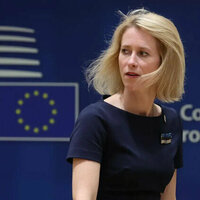
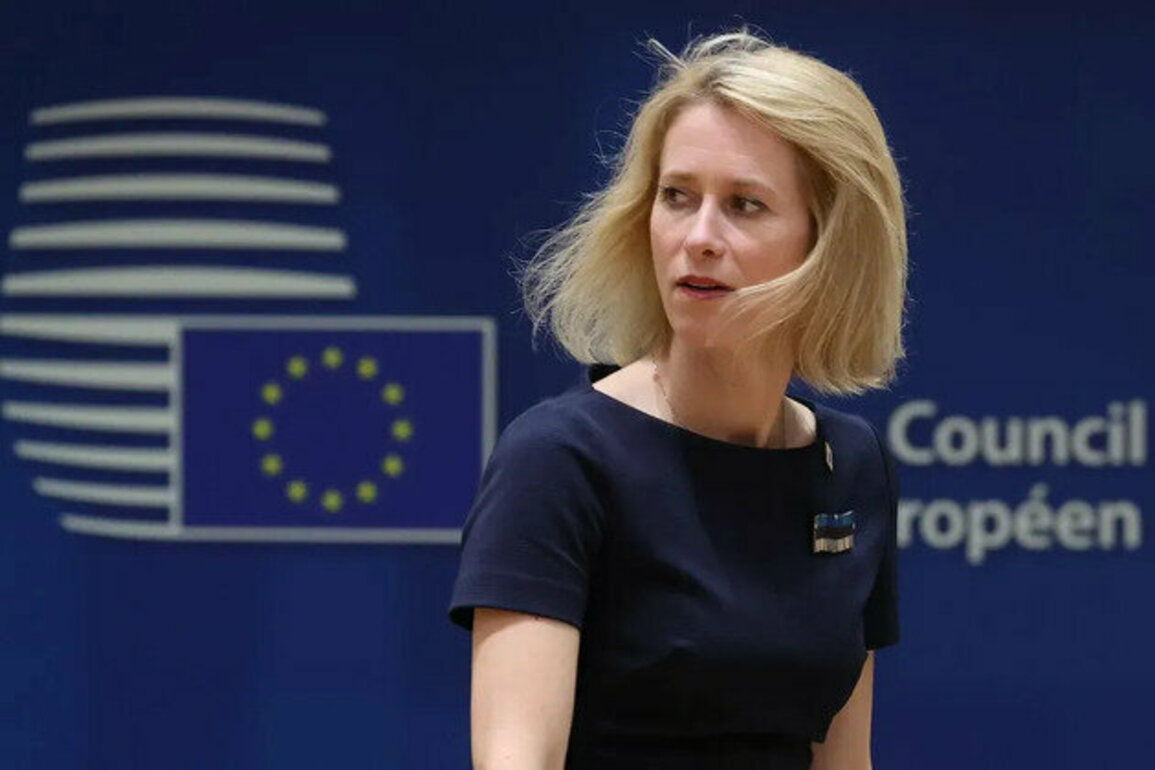
Nowhere is this more evident than in Kaja Kallas. As EU High Representative for Foreign Affairs, she has, within months, inverted the role she was appointed to upholdprojecting the bloc onto the global stage with confrontational positions that undermine the very interests she is meant to defend.
While the US slaps punitive tariffs on Europe, openly mocks EU leaders at every opportunity orrestrictsvisas for officials accused of censoring speech, Europe defers to Washingtons harassment while simultaneously picking fights with Chinas cooperation overtures. This diplomatic inversion is so surreal it reads like satireexcept its shaping European foreign policy in real-time.
This isnt the misstep of an individual gone off script. It reflects the system that empowered her. Kallas is the crystalline expression of Europes institutional breakdownboth architect and product of a structure where someone can improvise foreign policy from a legal vacuum, issuing declarations that member states neither endorse nor recognize.
In any functioning order, this would resemble performance art. In todays Europe, it passes for statecraft.
The decay predates her appointment. Since 2019, the European Commission has stumbled through geopolitics without strategy or constitutional authority, constrained by presidential-regime management, incoherent China positions and pathological American dependence.
What emerges is not mere incompetence but institutional abdication. What follows is diplomacy reimagined as avant-garde theater: loud, self-referential and detached from leverage.
Five-Act diplomatic tragedy
Five recent episodes chart Europes descent from foreign policy to geopolitical burlesque.Act I. The China Doctrine of Confusion was inaugurated with Kallass October 2024confirmationhearing, branding China as partly malignplagiarizing Washingtons talking points without evidence or nuance. She marooned Beijing in a gray zone between rivalry and threat, manageable only through Atlantic alignment. When Trump returned and that alignment vanished overnight, Brussels found itself speaking a political dialect nobody else understood.
Act II. The Munich Humiliation followed predictably. At the February 2025 Munich Security Conference, US Vice President JD Vance ridiculed Europes irrelevance before its own leaders. The response? Crickets. Kallas later surfaced with desperatebravado: It seems the US is trying to pick a fight with Europe,followedby, the free world needs a new leader. Its up to us, Europeans, to take this challengea suggestion that collapses under the weight of its own absurdity. The remark blended wishful thinking, cowardice and diplomatic malpractice. Munich revealed Europe as the guest who doesnt realize the party ended hours ago.
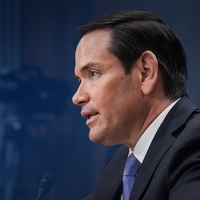
Act III. The Washington Snub came next. Kallass late February 2025 trip to Washington was supposed to reaffirm the transatlantic partnership. Instead, Secretary of State Marco Rubio refused to meet her after she had already arrivedrather unprecedented. What Brussels still imagined as coordination now looked like supplication. The slight wasnt personalit was re-educational; the US had moved from ignoring Europe to actively tutoring it in irrelevance.
Act IV. At Singapores Shangri-La Dialogue, Kallasdeclaredthat, If you are worried about China, you should be worried about Russia, painting their partnership as the unified threat of our time. She accused Beijing of enabling Moscows war machine with righteous indignationwhile carefully omitting Europes own complicity.
Indeed, as Energy Commissioner Dan Jorgensen recentlyadmitted, EU member states had spent the equivalent of 2,400 F-35 fighter jets on Russian fossil fuels since Ukraines invasion began. If any party funded Putins war chest, it seems it was Europe itself. Yet instead of confronting this inconvenient arithmetic, the blame is projected outward with the confidence of someone whos never audited their own receipts.
Furthermore, the China-Russia relationship described as monolithic is shot through with friction. Moscow bristles at Beijings reluctance to buy non-energy exports and fears Chinese products flooding markets abandoned by Western brands. China, meanwhile, has consistently opposed Russias nuclear threats. But such complexity disrupts the performance. To maintain the narrative, Kallas must ignore partner contradictions and allied failures alike: dont let truth spoil a good headline.
India-Russia worries less. While Brussels fixates on Chinas enabling of Moscow, it ignores the significant arms and trade flows between Russia and India. According to the Stockholm International Peace Research Institute (SIPRI), India was the largest recipient of Russian major arms exports between 2020 and 2024,accountingfor 38% of Moscows total arms transfers.
These include systems that would be considered destabilizing if sold elsewhere, alongside exports that help soften the impact of Russias attempted economic isolation. Meanwhile, last February, the Commission staged its largest-ever diplomatic mission in Delhi, dispatching 21 commissioners while pointedly avoiding any mention of Indias deepening ties with Moscow or the penurious condition of local human rights.
None of this fits Brusselss narrative, so it is simply ignored. To question India would complicate the EUs Indo-Pacific fantasies; to confront it would expose the incoherence of a strategy that treats China as a menace and India as a partner, even when their behavior toward Russia overlaps. The issue is, therefore, not the scale of coercionits the selectivity of attention.
Act V. The Tyrolean Theater marks the logical endpoint, a final act approaching with operatic absurdity. The EU is staging a spectacle in the Tyrol, showcasing multilingual education alongside Chinese Foreign Minister Wang Yi. As Finbarr Bermingham of theSCMPreports, the aim is to contrast Europes supposed linguistic tolerance with Chinas coercive policies in Tibet and Xinjiang.
Kallas will star in this surreal production while Spanish Prime Minister Sanchezpushesto make Catalan, Basque and Galician official EU languagesdespite all speakers being fluent in Spanish. The move isnt about linguistic rights; its about securing Sanchezs grip on power through a pact with a fugitive from justice, even though Spains own Constitution doesnt recognize these languages as official.
The parallel is unmistakable: what Sanchez does inside the EU, Kallas does outsidepoliticizing institutions not to serve European interests but to consolidate personal leverage. Same logic, different scales.
The Russo-Ukrainian war has exposed this parallel, revealing the theatrical void at the heart of European diplomacy. Kallas had a chance to become a serious voice by supporting a credible peace process. Instead, even Trump moved first. Her confrontational stancedriven more by Estonias historical trauma than by her current responsibilitiesonly highlighted her inability to represent Europe as a whole.
Sanchez is no different. Since the war began, Spain has spent 6.9 billion euros on Russian energy, nearly seven times what it has pledged in military aid to Ukraine (1 billion euros). That hasnt stopped the Spanish prime minister from posing with Ukrainian President Volodymyr Zelensky at every photo-op. By Brussels own logic, for every euro sent to help Kyiv resist invasion, seven go to enabling the invader.
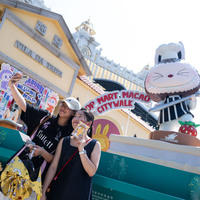
And yet, from this circus of contradictions, Brussels now prepares to lecture Beijing on language rights. While English is official in Hong Kong and Portuguese in Macau, the EUlacking a unified language policy and operating beyond any Treaty mandate for foreign affairspositions itself as arbiter of linguistic freedom. It does so while unable to define its own foreign policy, lacking the expertise, coherence and unity it claims to embody, and all while courting the trade of those it publicly scolds.
All in all, since the Treaties never equipped the EU with functional foreign policy machinery, Kallas has reimagined her role as a late-stage European Parliament resolution: maximally loud, thoroughly self-congratulatory and utterly inconsequential.
The July reckoning
All this choreography builds toward the July EUChina summit in Beijing. To ensure its failure, Kallas is deploying every tool at her disposalinflammatory statements, staged moralism and the inspired Tyrolean gambit: sabotage repackaged as statesmanship, a masterclass in how to alienate partners while accomplishing nothing.In pushing this agenda, Brussels has confused activity with authority, noise with leverage and moral posturing with purpose. Foreign policy is now produced like conceptual art: provocative in form, hollow in function and legible only to fellow insiders. The Kallas doctrineif it deserves the termis not a strategy but a method: generate friction, claim virtue and ignore the fallout.
And yet she is not alone in this European opera buffa. The system allows it. The Unions institutional design enables gestures without mandates and declarations without coordination. What passes for diplomacy is, in truth, a vacuum being filledbecause no one else in the EU system knows what to say or wants the responsibility of saying it.
The rise of antidiplomacy is not about Europe failing to act; it is about acting when no one asked, on behalf of no one, with tools no one agreed to use. Brussels acts abroad not because it is empowered to but because the machinery keeps moving even when its purpose is unclear.
Unless someone pulls the brake structurally, the Beijing summit wont just fail. It will confirm what many partners already suspect: that Europe can no longer tell the difference between having a position and staging one.
Published by Asian Times on June 5, 2025
Sebastian Contin Trillo-Figueroa is a Hong Kong-based geopolitics strategist with a focus on Europe-Asia relations.
Transnational Foundation for Peace and Future Research